
Kissousa Village is located at the top end of the Chapotami Valley, two kilometres east of Malia Village on the main E601 road to Limassol.
The name of Kissousa came from the fact that the region was adorned with elaborate formations of ivies (kissos in Greek means ivy). Also on the east bank of a river Chapotami nest thousands of birds their singing resonating around the village.

Short road down to Kassousa Village
Formerly the village was famous for its honey, produced in a traditional way in honeycombs. Since 1960 Kissousa Village became the main source of drinking water for the British base at Akrotiri Lemesou, so gradually the residents began to abandon the beekeeping.
 The first building you see when you enter the road down to Kissousa Village is the Community Centre Building 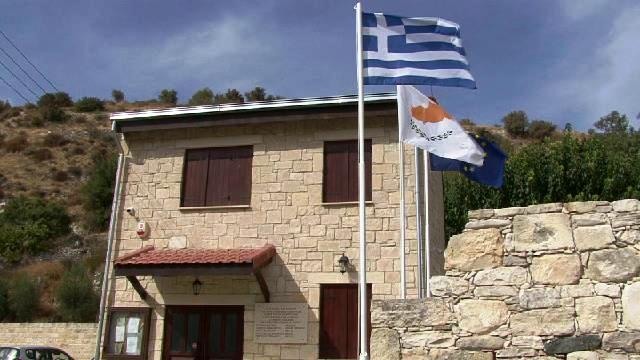
Kissousa Village Community Centre
|
|
Byzantine church of Saints Sergius and Bacchus
|
||
|
The Byzantine church of Agios Sergios and Bacchus is celebrated on October the 2nd. In the courtyard of the church grows a massive terebinth tree, 7 centuries old, which almost covers the church and most of the adjacent cemetery. |
||

Kissousa Village – Mastic Tree
The ancient Mastic Tree is in the churchyard of the Byzantine Agios Sergios & Bacchus church, and is over 600 years old, 16 metres tall and its trunk has a perimeter of 5 metres. |
|
More Images of Kissousa Village |
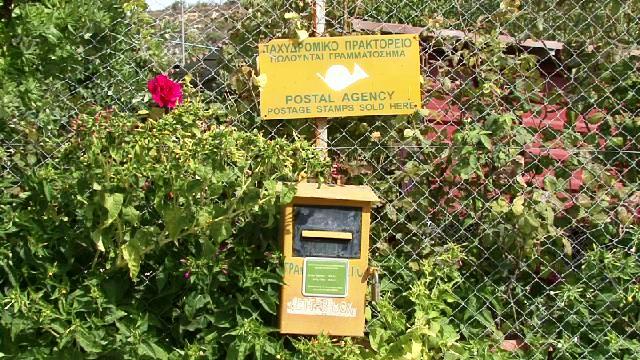
Kissousa Village Post Office
|
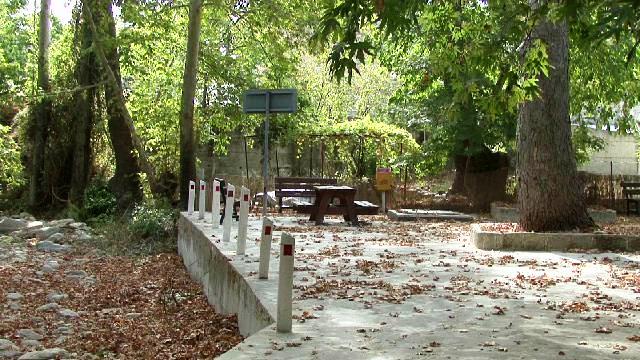
Kissousa Village Square The small village square, with the tall trees and ivies, the river and the dozens of springs that once had the best water in Cyprus, even to this day makes a really beautiful scene, even though the village has been left to the mercy of time and weather conditions. (Sunday 18th October 2020) |
|
|


